This site uses cookies. For more information, please see our Privacy Policy.
fix-btn-01-icon CONTACT US
Topex Enterprise Co., LTD
  • ABOUT
    • ABOUT TOPEX
    • WHY TOPEX
    • WHAT WE SELL
  • NEWSROOM
    • NEWS
    • Q&A
    • ROLLING W/ US
  • INDUSTRIES
    • BICYCLE/SPORTS EQUIPMENT
    • ELECTRIC MOTOR
    • MEDICAL/OPTICAL
    • ROBOTICS / AUTOMATION
    • RENEWABLE ENERGY
    • MACHINE TOOL
    • AGRICULTURAL/GARDENING
    • CHEMICAL/FOOD&BEVERAGE
  • PRODUCTS
  • CUSTOM BEARING
    • CUSTOM INTRO
    • CUSTOM PROCESS
  • TECHNPOLOGY CENTER
    • DOWNLOAD
    • Bearing Material
    • Bearing Clearance
    • Bearing Fit/Assemble
  • BIKE BEARING
    • E-BIKE Free Wheel Clutches
    • Full Ball Bearing for Frame
    • Hub Bearings
    • Botton Bracket Bearings
    • Bike Bearings
  • BALL BEARING
    • Ball Bearing 60 Series
    • Ball Bearing 62 Series
    • Ball Bearing 63 Series
    • Ball Bearing 64 Series
    • Ball Bearing 67 Series
    • Ball Bearing 68 Series
    • Ball Bearing 69 Series
    • Miniature Bearings
    • Angular Contact Ball Bearings 7 Series
    • Self-aligning Ball Bearings
    • Thurst Ball Bearings 5 Series
  • NEEDLE ROLLER BEARING
    • Needle Roller&Cage Assemblies(KT)
    • Drawn Cup Needle Roller Bearings(HK)
    • One-way Needle Roller Clutch Bearing(HF)
    • Thrust Needle Bearing(AXK)
    • Thrust Roller Bearing(AZK)
    • Needle Roller Bearings with Machined Rings(NK)
  • BUSHING
    • DU (AFB)
    • Flanged DUF/AFF
    • LFW
    • SPB
    • SPF
  • ROD END BEARINGS
    • PHS
    • POS
    • NHS
    • NOS
    • GE
    • PB
    • SB
    • RBL
    • RBI
  • LINEAR BEARINGS
    • LM
    • LM-L
    • LMF
    • LMF-L
    • LMK
    • LMK-L
    • LMH
    • LMH-L
    • SC
    • KH
  • MOUNTED UNITS
    • UCP
    • UCF
    • UCFL
    • UCFC
    • UCPA
    • UCFK
    • UCT
  • PARTS&ACCESSORIES
    • oil seals
MENU
( )
  • 繁中
  • EN
CLOSE
繁中 EN
  • ABOUT
    • ABOUT TOPEX
    • WHY TOPEX
    • WHAT WE SELL
  • NEWSROOM
    • NEWS
    • Q&A
    • ROLLING W/ US
  • INDUSTRIES
    • BICYCLE/SPORTS EQUIPMENT
    • ELECTRIC MOTOR
    • MEDICAL/OPTICAL
    • ROBOTICS / AUTOMATION
    • RENEWABLE ENERGY
    • MACHINE TOOL
    • AGRICULTURAL/GARDENING
    • CHEMICAL/FOOD&BEVERAGE
  • PRODUCTS
    • BIKE BEARING
      • E-BIKE Free Wheel Clutches
      • Full Ball Bearing for Frame
      • Hub Bearings
      • Botton Bracket Bearings
      • Bike Bearings
    • BALL BEARING
      • Ball Bearing 60 Series
      • Ball Bearing 62 Series
      • Ball Bearing 63 Series
      • Ball Bearing 64 Series
      • Ball Bearing 67 Series
      • Ball Bearing 68 Series
      • Ball Bearing 69 Series
      • Miniature Bearings
      • Angular Contact Ball Bearings 7 Series
      • Self-aligning Ball Bearings
      • Thurst Ball Bearings 5 Series
    • NEEDLE ROLLER BEARING
      • Needle Roller&Cage Assemblies(KT)
      • Drawn Cup Needle Roller Bearings(HK)
      • One-way Needle Roller Clutch Bearing(HF)
      • Thrust Needle Bearing(AXK)
      • Thrust Roller Bearing(AZK)
      • Needle Roller Bearings with Machined Rings(NK)
    • BUSHING
      • DU (AFB)
      • Flanged DUF/AFF
      • LFW
      • SPB
      • SPF
    • ROD END BEARINGS
      • PHS
      • POS
      • NHS
      • NOS
      • GE
      • PB
      • SB
      • RBL
      • RBI
    • LINEAR BEARINGS
      • LM
      • LM-L
      • LMF
      • LMF-L
      • LMK
      • LMK-L
      • LMH
      • LMH-L
      • SC
      • KH
    • MOUNTED UNITS
      • UCP
      • UCF
      • UCFL
      • UCFC
      • UCPA
      • UCFK
      • UCT
    • PARTS&ACCESSORIES
      • oil seals
  • CUSTOM BEARING
    • CUSTOM INTRO
    • CUSTOM PROCESS
  • TECHNPOLOGY CENTER
    • DOWNLOAD
    • Bearing Material
    • Bearing Clearance
    • Bearing Fit/Assemble
SUPERIOR
BEARING
SUPERIOR
BEARING
SUPERIOR
BEARING
SUPERIOR
BEARING
  • Home
  • PRODUCTS
  • BIKE BEARING
Full Ball Bearing for Frame 1

Full Ball Bearing for Frame

  • Full ball Bearing
  • Ceramic Bearing

Product Information

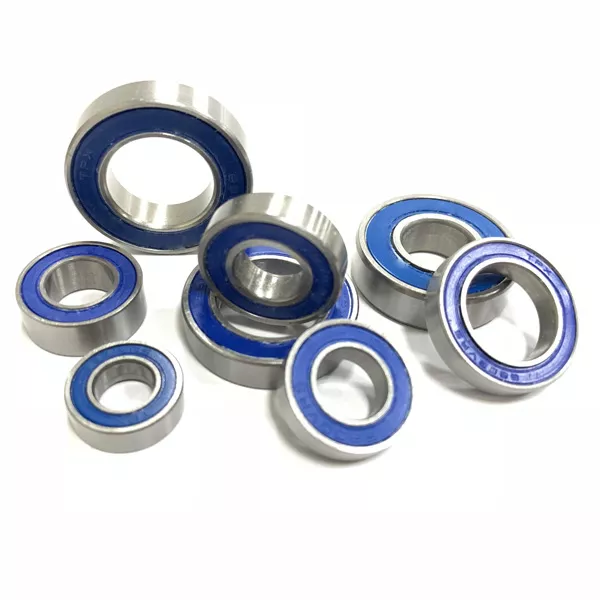
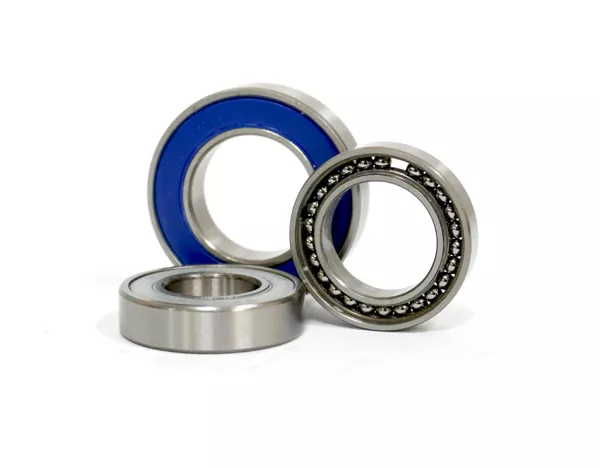
The entire space between the inner and outer rings of a full ball bearing is filled with balls. Unlike standard ball bearings, which typically have a retainer to maintain the spacing between the balls, full ball bearings lack a retainer, allowing more balls to be packed into the bearing. This increases the contact points, thereby enhancing the bearing's load-bearing capacity for both axial and radial loads.


STRENGTHS


  • Increased load capacity: The main advantage is its higher load capacity. 
  • Higher rigidity: Increased rigidity is advantageous in applications where stability and precision are crucial.


WEAKNESSES


  • Limited rotational speed: Increased ball quantity may impose speed limitations.
  • low shock resistance: Lack of retainer may compromise resistance to impact loads or collisions.

The main characteristic of full ball bearings is maximizing load capacity by utilizing the entire available space. This design choice makes full ball bearings particularly suitable for applications requiring high radial load capacity, such as bicycle frames, conveyor systems, automotive transmissions, and agricultural machinery.
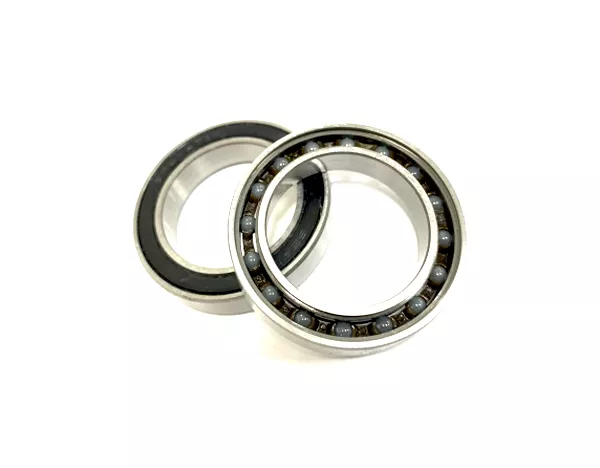

Ceramic ball bike bearings are commonly used in high-end and racing bikes for components like the bottom bracket, pedals, and wheels, offering improved efficiency, smoothness, and durability.


Ceramic ball bike bearings use ceramic material for the rolling elements, which can be divided into two main types: full ceramic ball bearings (with ceramic inner+ outer races +ceramic balls) and hybrid ceramic ball bearings (with steel/stainless steel races paired with ceramic balls).

The two primary types of ceramic materials used are aluminum oxide (Alumina Oxide) and silicon nitride (Silicon Nitride). Compared to traditional steel balls, these ceramic materials offer advantages such as lighter weight, increased hardness, wear resistance, and corrosion resistance. Hence, they are widely used in high-performance and racing bicycle components.


STRENGTHS


  • Lightweight: Ceramic materials are lighter than steel, helping to reduce the overall weight and improve bicycle performance.
  • Hardness: Ceramic balls are harder than steel balls, meaning they are more resistant to wear and can operate for longer periods under high speeds and loads.
  • Wear resistance: Ceramic materials have superior wear resistance, reducing bearing wear and extending their lifespan.
  • Corrosion resistance: Ceramics are less prone to rust, making them more suitable for humid environments compared to steel.
  • Low friction: Ceramic balls generate less friction during operation, enhancing bicycle efficiency and reducing energy loss.
  • High temperature stability: Ceramic ball bearings exhibit better stability in high-temperature environments, which is important for certain high-performance applications and competitions.

WEAKNESSES


  • High cost: Ceramic ball bearings are relatively more expensive compared to traditional steel ball bearings.
  • Brittleness: Ceramic materials are more brittle than steel and may fracture under strong impacts or excessive loads, leading to bearing damage.
  • Not suitable for all applications: Ceramic ball bearings may not be suitable for all bicycle applications. In some cases, such as mountain biking where high impact resistance is required, steel ball bearings may be more appropriate.
  • Limited specification options: Customization may be necessary if non-standard specifications are required.
  • Over-Expectations: There might be over-expectations regarding the performance of ceramic ball bearings, with people believing they can significantly improve bicycle performance. While ceramic ball bearings do offer some advantages, their impact may be limited, especially under normal riding conditions



Full ball Bearing

Product Information

The entire space between the inner and outer rings of a full ball bearing is filled with balls. Unlike standard ball bearings, which typically have a retainer to maintain the spacing between the balls, full ball bearings lack a retainer, allowing more balls to be packed into the bearing. This increases the contact points, thereby enhancing the bearing's load-bearing capacity for both axial and radial loads.


STRENGTHS


  • Increased load capacity: The main advantage is its higher load capacity. 
  • Higher rigidity: Increased rigidity is advantageous in applications where stability and precision are crucial.


WEAKNESSES


  • Limited rotational speed: Increased ball quantity may impose speed limitations.
  • low shock resistance: Lack of retainer may compromise resistance to impact loads or collisions.

The main characteristic of full ball bearings is maximizing load capacity by utilizing the entire available space. This design choice makes full ball bearings particularly suitable for applications requiring high radial load capacity, such as bicycle frames, conveyor systems, automotive transmissions, and agricultural machinery.

Ceramic Bearing


Ceramic ball bike bearings are commonly used in high-end and racing bikes for components like the bottom bracket, pedals, and wheels, offering improved efficiency, smoothness, and durability.


Ceramic ball bike bearings use ceramic material for the rolling elements, which can be divided into two main types: full ceramic ball bearings (with ceramic inner+ outer races +ceramic balls) and hybrid ceramic ball bearings (with steel/stainless steel races paired with ceramic balls).

The two primary types of ceramic materials used are aluminum oxide (Alumina Oxide) and silicon nitride (Silicon Nitride). Compared to traditional steel balls, these ceramic materials offer advantages such as lighter weight, increased hardness, wear resistance, and corrosion resistance. Hence, they are widely used in high-performance and racing bicycle components.


STRENGTHS


  • Lightweight: Ceramic materials are lighter than steel, helping to reduce the overall weight and improve bicycle performance.
  • Hardness: Ceramic balls are harder than steel balls, meaning they are more resistant to wear and can operate for longer periods under high speeds and loads.
  • Wear resistance: Ceramic materials have superior wear resistance, reducing bearing wear and extending their lifespan.
  • Corrosion resistance: Ceramics are less prone to rust, making them more suitable for humid environments compared to steel.
  • Low friction: Ceramic balls generate less friction during operation, enhancing bicycle efficiency and reducing energy loss.
  • High temperature stability: Ceramic ball bearings exhibit better stability in high-temperature environments, which is important for certain high-performance applications and competitions.

WEAKNESSES


  • High cost: Ceramic ball bearings are relatively more expensive compared to traditional steel ball bearings.
  • Brittleness: Ceramic materials are more brittle than steel and may fracture under strong impacts or excessive loads, leading to bearing damage.
  • Not suitable for all applications: Ceramic ball bearings may not be suitable for all bicycle applications. In some cases, such as mountain biking where high impact resistance is required, steel ball bearings may be more appropriate.
  • Limited specification options: Customization may be necessary if non-standard specifications are required.
  • Over-Expectations: There might be over-expectations regarding the performance of ceramic ball bearings, with people believing they can significantly improve bicycle performance. While ceramic ball bearings do offer some advantages, their impact may be limited, especially under normal riding conditions


BACK
footer-logo
  • Phone +886 (04)2688-6721
  • Fax +886 (04)2686-2115
  • Email buytpx@topex.com.tw
  • Address No. 11, Ln. 706, Erkan Rd., Waipu Dist., Taichung City 43858 , Taiwan (R.O.C.)
CONTACT US
Recommend using Chrome, Firefox, Safari latest version of the browser.
256 bit SSL Encryption
Designed by MIRACLEWeb Design
TOP